Sunsets, Loons, and the Northern Lights
By The hosts
If I had to sell someone on this place in one sentence, I wouldn't talk about the cottage or the dock. I'd tell them about the sky. The light up here does things you don't see in the city, and it runs all night.
The sunset hour
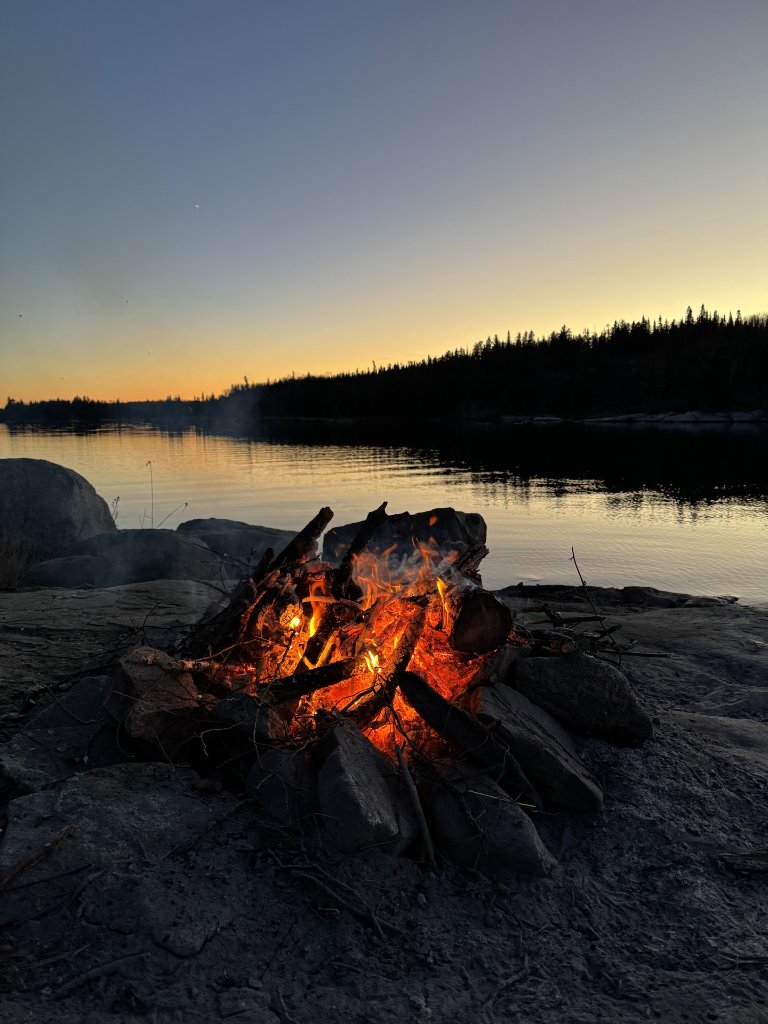
Let's start where the day ends. Minaki is famous for its sunsets, and Gunn Lake serves them up over the treeline with the whole show reflected in the water. The boreal forest makes a black sawtooth horizon, and the sky goes from gold to pink to a deep red that lights a path straight across the lake to wherever you're sitting.
The move is to be down by the water for it. Get the campfire going a little early, point your chair west, and just watch. Bring a drink, don't bring your phone - or if you do, take one photo and then put it away. This is a thing to be in, not to document.
Listen for the loons
As the light fades, the soundtrack starts. The call of a loon across a still lake at dusk is one of the great sounds of the Canadian north - that long, wavering wail that sounds almost lonesome until you realize it's just the lake talking to itself.
Loons are fish-eaters and excellent divers; you'll see them out on the water during the day, then they get vocal at dusk and through the night. Once you learn their calls you start to hear the different ones - the wail, the tremolo, the yodel. Kids love this. So do adults who won't admit it.
You might also catch beavers working at dusk, the slap of a tail when one spots you, the splash of a fish rising, and the rustle of the forest settling in for the night. It's never silent out here. It's just quiet in the right way.
Then the stars come out
Here's something a lot of first-timers aren't ready for: how many stars there are. With no city glow for miles, the night sky out here is absolutely loaded. The Milky Way stretches right across, and on a clear moonless night you can see more stars than you knew were up there.
Give your eyes a good twenty minutes to adjust - keep the headlamps off - and just lie back on the dock. You'll catch satellites tracking across, the odd shooting star, and a depth to the sky you forget exists.
And if you're lucky - the aurora
Northwest Ontario sits far enough north that the northern lights make appearances, especially in the darker months of spring and fall. There's no schedule - that's part of the magic - but on the right night you'll see green curtains shimmering low on the northern horizon, sometimes pulsing and shifting.
Someone always wanders down to the dock for one last look at the fire, looks up, and the whole cabin empties out two minutes later.
If the sky's clear and it's dark, it's always worth a glance north before bed. You won't see them every trip. But the night you do is the night you'll never forget.
The lesson in all of it: don't go to bed too early up here. The best show of the day often starts after dark.